

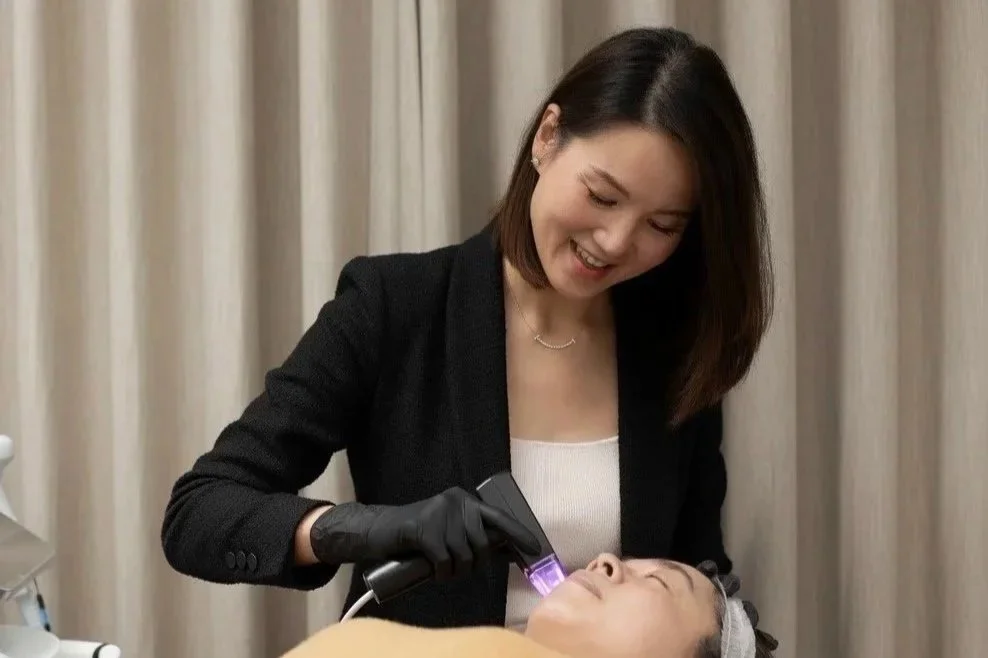
Exosomes
Exosome treatments are used as a supportive adjunct to Morpheus 8. They help assist skin recovery after treatment and support hair rejuvenation for improved overall results.
The Benefits:
1. Supports Post-Treatment Skin Recovery
Exosome treatments are often used following procedures such as Morpheus 8 to help support the skin’s natural recovery process, reduce inflammation, and promote faster healing.
2. Enhances Results of Other Treatments
When used as an adjunct, exosomes can help improve and prolong the results of other aesthetic treatments by supporting skin repair and renewal at a cellular level.
3. Improves Skin Quality and Radiance
Exosome treatments may help refine skin texture, improve tone, and enhance overall radiance by supporting the skin’s natural regenerative processes.
4. Minimal Downtime
Exosome treatments involve little to no downtime. Most patients can resume normal activities shortly after the procedure, with any temporary redness or mild swelling typically resolving within 24–48 hours.
5. Supports Hair Rejuvenation
Exosome treatments can also be applied to the scalp to support hair rejuvenation, helping to improve hair quality, thickness, and overall scalp health over time.
General Information:
What are exosomes?
Exosomes are tiny vesicles naturally released by cells that play an important role in cell-to-cell communication. They carry RNA, proteins, growth factors and other signalling molecules that can support tissue repair and skin cell function.
What is the main function of exosomes in aesthetic treatments?
Exosomes act as messengers, delivering important signalling molecules between cells. This process helps support the skin’s natural repair and rejuvenation mechanisms.
What types of exosome products are available for professional use?
Exosome products for skin and scalp rejuvenation are generally available in two main forms: lyophilised (freeze-dried) and non-lyophilised. Lyophilised versions are more stable at room temperature and are commonly preferred for professional topical treatments.
How are exosome treatments typically applied in a clinic?
Exosome treatments are applied topically, usually immediately after procedures such as radiofrequency microneedling (e.g. Morpheus 8), traditional microneedling, chemical peels or certain laser treatments. They are used to support skin recovery and enhance overall treatment outcomes.
Are exosome treatments suitable for injection?
No. These treatments are formulated and approved for topical use only. They are not intended for injection or intravenous administration.
What is the source of the exosomes used in treatments?
Exosomes used in aesthetic treatments are typically derived from human adipose (fat) tissue stem cells or selected plant sources such as rose cells. These sources are chosen for their ability to support skin and scalp health.
How is the quality and consistency of exosome products maintained?
High-quality exosome products undergo strict purification, filtration and testing processes. This includes in-vitro testing to confirm purity, concentration and the ability to support skin cell activity. Reputable manufacturers maintain multiple master cell banks and follow strict quality control standards to ensure batch-to-batch consistency.
Is there any downtime with exosome treatments?
Exosome treatments are topical and generally involve little to no downtime. Any temporary redness or mild swelling usually resolves within 24–48 hours.
Can exosome treatments be used for hair rejuvenation?
Yes. Exosome treatments can be applied to the scalp to support hair rejuvenation by delivering growth factors that help improve hair quality and scalp health.
Important Information Individual results vary. A thorough consultation with Dr Kimberly Lim is required to determine whether exosome therapy is suitable for your skin or scalp concerns. These treatments are used as adjunctive topical therapies and are provided in accordance with all relevant TGA and AHPRA guidelines.